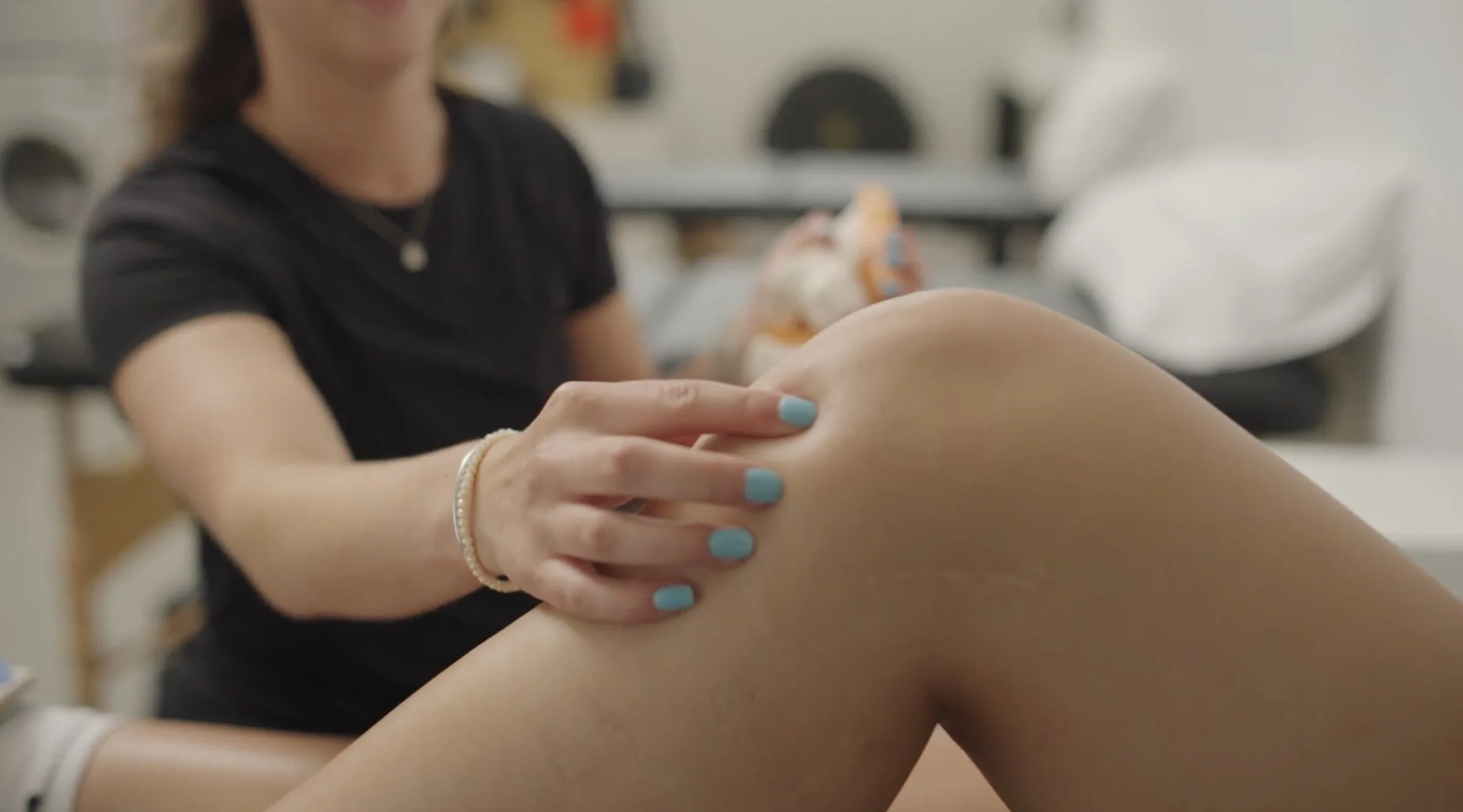
Patellofemoral Pain in Female Athletes
What You Need to Know
Patellofemoral pain (runner’s knee) is common in female athletes across multiple sports. While frustrating, it is highly treatable with targeted strength and movement retraining.
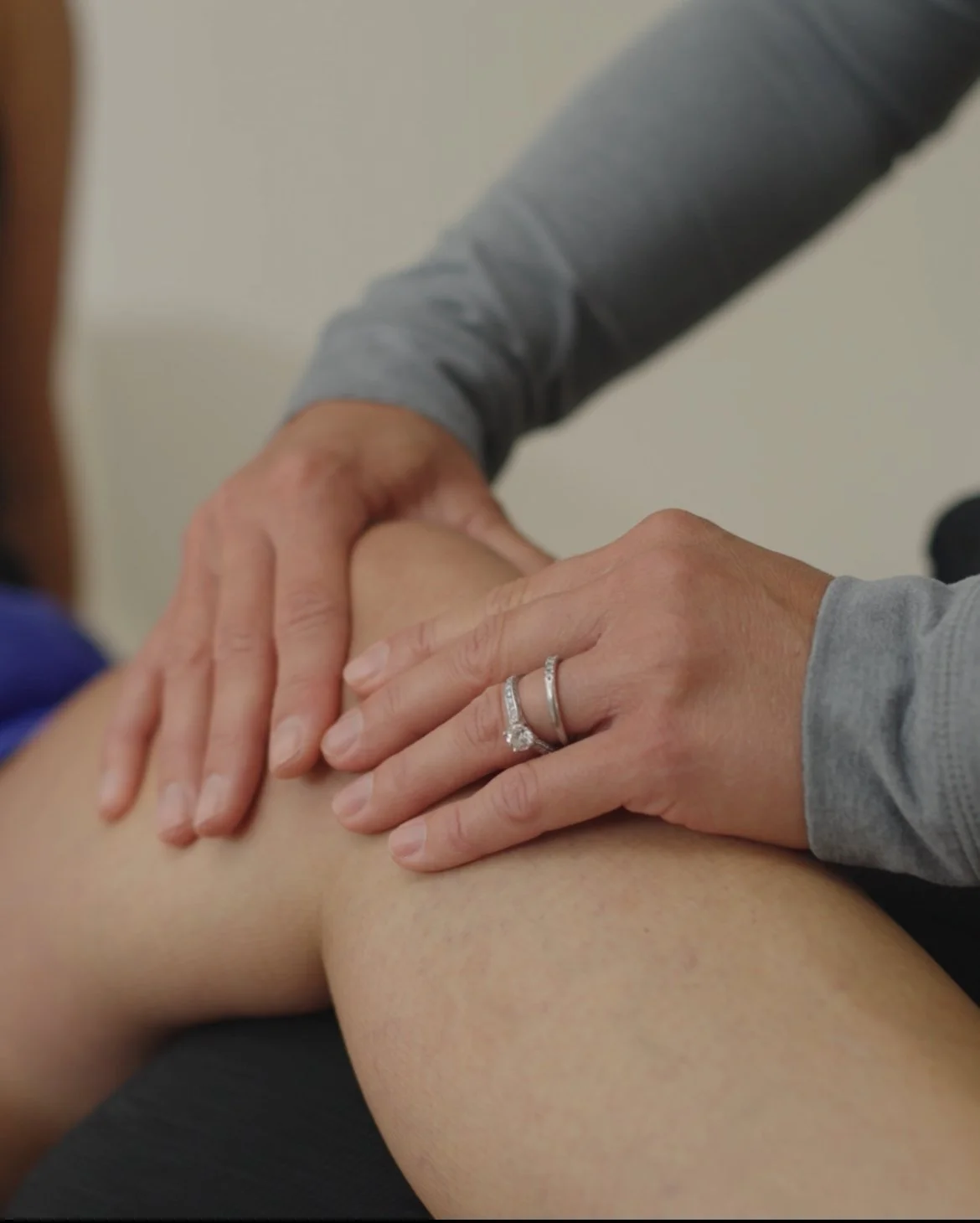
Knee pain is common among active individuals, especially athletes involved in running, jumping, squatting, and other repetitive activities. One of the most common causes of knee pain is patellofemoral pain (PFP)—pain that comes from the area around or behind the kneecap.
Patellofemoral pain can be frustrating because it may not come from one specific injury or event. Instead, it often develops when the demands placed on the knee begin to exceed the body’s ability to tolerate and adapt to those demands.
The good news? Patellofemoral pain is highly manageable, and with the right combination of education, strength training, movement retraining, and gradual progression back to activity, athletes can often return to the activities they love with more confidence and resilience.
1️⃣ What Is Patellofemoral Pain?
Patellofemoral pain refers to pain around or behind the kneecap, or patella. The patella sits within the quadriceps tendon and moves along the femur as the knee bends and straightens.
Because the kneecap is involved in everyday movements, symptoms can show up during a wide variety of activities, including:
Running or jumping
Squatting and lunging
Going up or down stairs
Walking uphill or downhill
Getting up from a chair
Prolonged sitting with the knee bent
Sport-specific movements such as cutting, jumping, or landing
Athletes may describe the pain as an ache, pressure, soreness, or discomfort around the kneecap. Some people may also notice clicking, popping, or a feeling of stiffness in the knee.
One important distinction is that patellofemoral pain is not necessarily the result of one traumatic injury. Unlike an ACL tear or a meniscus injury, there may not be a single moment when the athlete can say, “That’s when I hurt my knee.” Symptoms can gradually build over time.
2️⃣ What Makes Patellofemoral Pain Different?
One of the biggest challenges with patellofemoral pain is that there is rarely one single cause.
PFP can be influenced by a combination of factors, including training load, muscle capacity, strength, movement patterns, recovery, biomechanics, and individual anatomy.
For female athletes in particular, several factors may contribute to increased risk.
Hip and Lower-Body Strength
The muscles around the hip and pelvis help control how the leg moves during running, jumping, and landing. If an athlete does not have adequate strength or endurance to control these movements, the knee may experience increased stress.
This doesn't mean that hip weakness is always the cause of knee pain. Rather, building strength throughout the hip and lower extremity can improve an athlete's ability to tolerate sport demands.
Landing and Movement Mechanics
Running, jumping, and cutting require the body to absorb and redirect large forces. An athlete who has difficulty controlling their position during these movements may place greater demands on certain tissues.
Movement retraining can help athletes develop more efficient ways to absorb force, control the knee and hip, and produce force during sport-specific movements.
Training Load and Sudden Changes
A common contributor to patellofemoral pain is simply doing more than the body is currently prepared to handle.
A sudden increase in:
Running mileage
Speed work
Hill training
Jumping volume
Practice frequency
Strength training
Competition
Overall activity
can increase stress on the knee before the body has had enough time to adapt.
This is especially important during periods such as the start of a new season, returning from an injury, or increasing training for an upcoming race.
3️⃣ Why Are Female Athletes Often Discussed in Relation to PFP?
Research has consistently shown that female athletes can experience patellofemoral pain at higher rates than their male counterparts. However, there is no single explanation for this difference.
A combination of biological, hormonal, anatomical, neuromuscular, training, and sport-specific factors may contribute.
Rather than focusing on one body position or blaming an athlete's anatomy, our goal should be to identify the modifiable factors that can improve strength, movement capacity, recovery, and tolerance to sport.
This is where individualized physical therapy can make a significant difference.
4️⃣ Strength Training: Building a Knee That Can Handle the Demands of Sport
One of the most effective components of managing patellofemoral pain is progressive strength training.
The goal isn't simply to make the knee stronger. We want to build capacity throughout the entire kinetic chain so the athlete can better tolerate the demands of their sport.
Glutes and Hip Muscles
The muscles surrounding the hip help control the position and movement of the pelvis and lower extremity.
Exercises may include:
Hip abduction and strengthening
Single-leg exercises
Step-ups and step-downs
Split squats
Deadlift variations
Quadriceps
The quadriceps play an important role in controlling knee movement and absorbing forces during activities such as running, jumping, squatting, and landing.
Depending on the athlete, strengthening may include:
Squats
Lunges
Leg press
Step-downs
Knee extension exercises
Single-leg strengthening
Core and Trunk
The core and trunk contribute to overall control during running, jumping, cutting, and single-leg movements.
A strong and well-coordinated trunk can help an athlete maintain control while transferring forces between the upper and lower body.
The key is progression. An athlete doesn't need to avoid loading the knee forever because it hurts. Instead, we want to determine an appropriate starting point and gradually increase the challenge as symptoms and capacity improve.
5️⃣ Movement Retraining: It's About More Than “Perfect Form”
Movement retraining can be an important part of rehabilitation, particularly when an athlete's symptoms are associated with specific movements.
Rather than teaching every athlete that there is one “perfect” way to move, we look at how their individual movement strategy relates to their symptoms and sport demands.
This may include:
Squat and Lunge Mechanics
We can assess how an athlete controls their knee, hip, ankle, and trunk during squatting and single-leg movements.
Jumping and Landing
For athletes participating in jumping sports, we can work on their ability to safely and efficiently absorb and produce force.
Running Mechanics
For runners, we may evaluate factors such as cadence, stride characteristics, training volume, speed, hills, and running tolerance.
The goal is not necessarily to completely change the way someone runs. Instead, we identify opportunities to reduce unnecessary stress, improve efficiency, and gradually build tolerance.
6️⃣ Managing Training Load and Recovery
One of the most overlooked pieces of patellofemoral pain rehabilitation is load management.
Complete rest is not always necessary, and stopping all activity can sometimes make returning to sport more difficult.
Instead, we often modify the variables that are contributing to symptoms.
For example, a runner may temporarily adjust:
Weekly mileage
Running frequency
Pace or intensity
Hills
Speed work
Long-run distance
An athlete may still be able to participate in modified training while we work on improving their strength and capacity.
The goal is to find the right balance between providing enough stimulus for adaptation without repeatedly exceeding the knee's current tolerance.
7️⃣ What Are the Signs You Shouldn't Ignore?
Patellofemoral pain can start subtly. An athlete may notice that their knee is “a little sore” after running or that stairs suddenly feel uncomfortable.
Pay attention if you notice:
Pain that consistently occurs during or after activity
Pain with running, jumping, squatting, or stairs
Pain after sitting for a prolonged period
Symptoms that are becoming more frequent or intense
Needing to change the way you train because of knee pain
Difficulty completing normal sport-specific movements
Pain that continues to worsen despite modifying activity
You don't have to wait until knee pain becomes severe before getting evaluated.
Early assessment can help identify contributing factors and give you a plan for managing symptoms while continuing to build strength and capacity.
8️⃣ What Can Physical Therapy Do?
At KINISI, our goal isn't simply to make the pain go away. We want to understand why the athlete is having difficulty tolerating their current demands and determine what needs to change.
An evaluation may include:
Assessing strength and endurance
Looking at hip, knee, and ankle mobility
Evaluating single-leg control
Analyzing running, jumping, or landing mechanics
Reviewing recent changes in training
Identifying factors affecting recovery
Creating an individualized strength program
Developing a gradual return-to-running or return-to-sport plan
Treatment should be specific to the athlete—not just the diagnosis.
Two athletes can have the same diagnosis of patellofemoral pain and require completely different rehabilitation programs depending on their sport, training schedule, strength, symptoms, goals, and previous injuries.
9️⃣ The Goal: Return Stronger, Not Just Pain-Free
Successful rehabilitation is about more than getting through the next practice without pain.
We want athletes to develop the strength, movement capacity, confidence, and workload tolerance needed to handle the demands of their sport.
For runners, that may mean building back to their normal mileage.
For a soccer player, it may mean progressing from strength training to running, cutting, sprinting, and eventually full practice.
For a basketball player, it may mean progressing from controlled strength exercises to repeated jumping, landing, cutting, and game-specific movements.
The rehabilitation process should meet the athlete where they are and progressively prepare them for where they want to go.
🔟 Final Thoughts
Patellofemoral pain is common, but knee pain does not have to be a permanent part of being an athlete.
Understanding the signs, identifying contributing factors, appropriately managing training load, and building strength can help athletes get back to the activities they love.
For female athletes especially, proactive strength training and individualized movement strategies can help build stronger, more resilient bodies that are prepared for the demands of sport.
If you're experiencing persistent knee pain with running, jumping, stairs, squatting, or sport, don't feel like you have to simply “push through it.” Early evaluation can help you understand what's contributing to your symptoms and create a plan to keep you moving forward.
At KINISI, we're here to help you move better, get stronger, and get back to doing what you love. 💜